
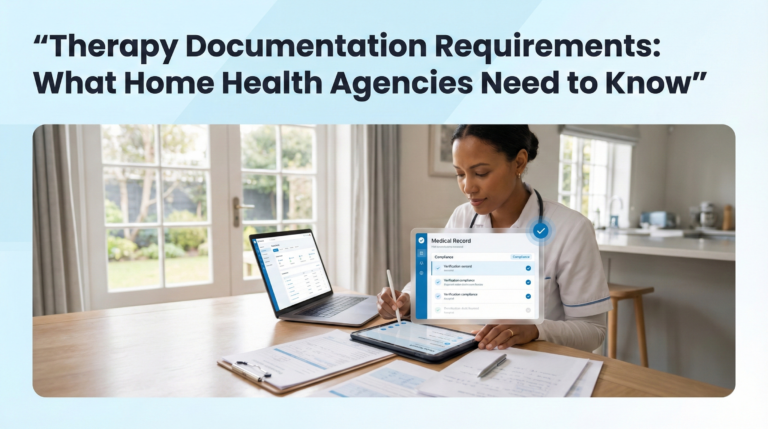
For home health agencies, therapy documentation is more than an administrative task—it is a core component of compliance, operational clarity, and continuity of care. Clear, timely documentation supports regulatory readiness, reduces follow-ups, and helps agencies maintain consistent workflows across therapy services.
Understanding therapy documentation requirements for home health agencies allows teams to set expectations early and minimize avoidable challenges throughout the care cycle.
Why Therapy Documentation Is a Compliance Priority
Therapy documentation plays a critical role in how home health agencies demonstrate adherence to regulatory and payer expectations. Documentation serves as the official record of services provided and supports accountability across clinical and operational functions.
Home health agencies often prioritize documentation practices that:
● Reflect accurate and complete visit activity
● Align with agency policies and regulatory guidance
● Support internal review and audit readiness
Clear documentation helps agencies maintain confidence in their processes while reducing downstream issues.
Common Documentation Challenges Home Health Agencies Encounter
During internal reviews, home health agencies frequently identify similar challenges related to therapy documentation requirements, including:
● Delays in note submission
● Incomplete visit records
● Missing documentation for unsuccessful patient contact attempts
● Inconsistent language across therapy disciplines
When these issues occur, agencies may experience increased follow-ups, workflow delays, or added administrative burden.
Timeliness and Completeness of Therapy Notes
Timely documentation remains a recurring focus for home health agencies.
Many agencies emphasize:
● Same-day completion of therapy visit documentation when possible
● Submission of all required notes before processes move forward
● Clear recording of unsuccessful visit attempts—not only completed visits
Completeness ensures agency records accurately reflect all activity related to patient care.
Consistent and Compliant Documentation Language
Language clarity is a key component of therapy documentation requirements for home health agencies.
Agencies often reinforce the use of:
● Neutral, compliant phrasing
● Terminology aligned with regulatory guidance
● Clear descriptions that accurately reflect visit outcomes
Consistent documentation language helps reduce misinterpretation and supports shared understanding across teams.
Documentation Requirements Across Therapy Disciplines
Therapy documentation requirements apply consistently across physical therapy, occupational therapy, and speech therapy services.
Home health agencies typically ensure that:
● Documentation standards are clearly communicated across disciplines
● Expectations remain consistent regardless of therapy type
● All therapy services follow the same compliance framework
This consistency supports smoother coordination and internal review processes.
Preparing for Reviews and Audits
Strong documentation practices help home health agencies remain prepared for internal and external reviews.
Agencies often focus on:
● Maintaining organized, complete therapy records
● Ensuring documentation timelines are consistently met
● Reviewing documentation patterns to identify improvement opportunities
Preparation reduces stress and allows agencies to respond confidently during audits or reviews.
How Home Health Agencies Work With FeldCare Connects
Home health agencies that work with FeldCare Connects do so with the understanding that agencies retain full responsibility for documentation standards, billing, and compliance.
FeldCare Connects supports agencies by facilitating coordination in alignment with agency documentation expectations—always communicating on behalf of agency requirements, not as an enforcing authority or employer.
Building Strong Therapy Documentation Practices Over Time
Strong therapy documentation practices are built through clarity, consistency, and collaboration. By reinforcing expectations early and revisiting them regularly, home health agencies can reduce operational friction and strengthen compliance readiness throughout the year.
Treating documentation as a foundational practice supports both day-to-day efficiency and long-term operational stability.